In addition to reviewing the macroeconomic landscape and investment trends, Colliers’ overview also provided detailed insights into the current state of the office, retail and industrial real estate markets.
Improving macroeconomic environment, but energy prices continue to represent a risk
In his introduction, Kristóf Tóth (Associate Director, Head of Research) presented the key macroeconomic indicators, according to which Hungary’s GDP growth is currently expected to reach 1.6–1.8% in 2026 and 2.5–3.0% in 2027. Inflation stood at 1.8% in the first half of the year; the labour market remained tight, with the unemployment rate reaching 4.4% in June, while nominal net wages increased by 14.6% between January and May.
Following the elections, country risk decreased visibly, with the five-year CDS spread declining from 115 basis points to around 68 basis points. Contrary to European trends and in a particularly notable development, the yield on the 10-year Hungarian government bond decreased by approximately 200 basis points, while the Hungarian forint strengthened significantly, by approximately 10% against the euro. The more favourable risk and financing environment is one of the most important prerequisites for the recovery of real estate investment activity.
However, the positive data is still overshadowed by geopolitical tensions and the continued risk of rising energy costs. Hungarian industrial production increased by 0.7% between January and May, primarily due to the manufacturing of electrical equipment and transport vehicles. The projects of BYD, BMW and CATL represent growth potential on the one hand, while weak global demand continues to be a factor of uncertainty. Construction output was 4.3% lower than a year earlier during the same period; construction costs were restrained by the stronger forint and weak demand, while rising wages and energy prices continue to contribute to increasing cost pressures.
Balázs Zelles-Görgey (Director, Head of Capital Markets) highlighted that in the first half of 2026, Hungarian commercial real estate investment volume reached EUR 610 million, representing a 26.7% year-on-year increase and the strongest first-half performance since 2021. Based on the strong pipeline of ongoing transactions, annual volume could exceed EUR 1.2 billion. 74% of investment activity was linked to Hungarian buyers. The most sought-after segment was office, accounting for a 37.9% share (Capital Square, Millennium Tower I). This was followed by retail with 32.9% (including transactions such as Árkád Szeged, Korzó Nyíregyháza and the Park Center portfolio transaction), and industrial and logistics properties with 18.5% (HelloParks Fót F1). Prime yields remained stable across the main asset classes: 6.50% for offices, 7% for shopping centres and 6.75% for modern industrial and logistics assets.
According to Colliers, the easing of political uncertainty, the decline in country risk and improving financing conditions are expected to support the gradual recovery of the Hungarian investment market over the next 12–24 months. Alongside domestic investors, activity from Central and Eastern European capital – particularly Czech, Slovak and Romanian investors, as well as potentially Baltic and Balkan capital – may strengthen first. In addition, increased activity from French investment funds, so-called SCPI funds, and Israeli investors is expected.
Looking at the Central and Eastern European (CEE-6) commercial real estate investment market, total transaction volume reached EUR 5.8 billion in the first six months of 2026, representing a significant improvement compared to recent years and clearly indicating that investor confidence is returning to the region. Hungary returned to the third position on the podium with a transaction volume of EUR 0.6 billion, while Poland recorded EUR 3 billion and the Czech Republic EUR 1.4 billion in transaction volume. At the same time, this should not be considered a broad-based market recovery: capital continues to flow selectively into assets that offer stable income generation, strong ESG performance and a competitive long-term market position.
Office market: stabilising market, declining vacancy rate, positive net absorption, but lower net demand
Miklós Ecsődi (Partner, Head of Occupier Services) highlighted in his summary that the Budapest office market is showing signs of stabilisation: the previous increase in vacancy has stopped, while the volume of new deliveries remains extremely low. Leasing activity in the first half of the year continued to be dominated by lease renewals: their volume increased by 28.6%, accounting for 53.3% of all transactions. The volume of new lease agreements decreased by 49%, while pre-lease activity amounted to only 600 sq m. Prime rents stand at EUR 25.5/sq m/month, the average rent level for Category A offices is EUR 17.1/sq m/month, while newly built properties are characterised by rental levels of EUR 19–23/sq m/month.
The cautious approach of developers is clearly demonstrated by the fact that only 110,012 sq m of speculative office space is expected to be delivered by the end of 2028, of which 38,508 sq m is expected to be completed in 2026. Almost 87% of the pipeline is concentrated along the Váci Corridor. The limited new supply and demand for modern, energy-efficient buildings are expected to result in increasingly stronger occupier competition for new buildings in the medium term. At the same time, this will be counterbalanced by the fact that the rental premiums of new developments will be significantly higher compared to existing office stock than what the market has been accustomed to in the past – the impact of the rapid construction cost increases experienced in previous years is now becoming increasingly visible in the market.
The modern office stock in Budapest totals 4.474 million sq m, which is only 1.1% higher than the level recorded a year earlier. Following a slight year-on-year decrease, the average vacancy rate declined to 12.2%, while vacancy within the speculative stock edged down to 15.7%. Total leasing volume reached 215,042 sq m in the first half of 2026, representing a 1% year-on-year increase, while net demand decreased by 42.9% to 57,644 sq m. Net absorption was positive at 42,302 sq m.
In the short term, vacancy rates may still fluctuate, partly due to government relocations, but a gradual correction may follow over the medium term. Research and development as well as knowledge-intensive service centres have also appeared in the market, which is a positive signal and may improve net demand, particularly for new developments. At the same time, finding appropriately sized, modern and contiguous office space may become an increasing challenge for larger occupiers requiring high-quality new office environments.
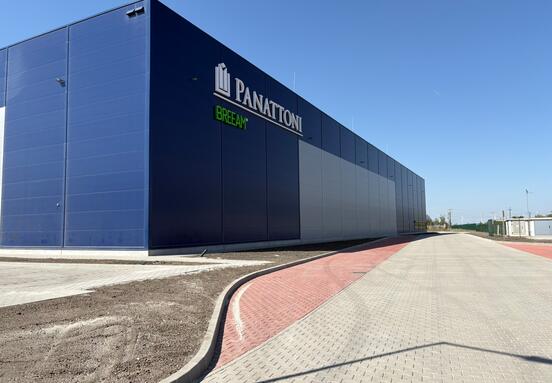
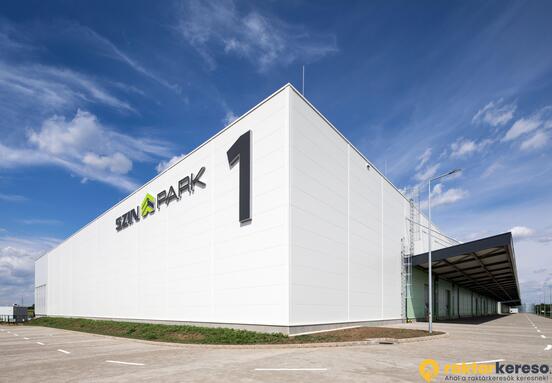
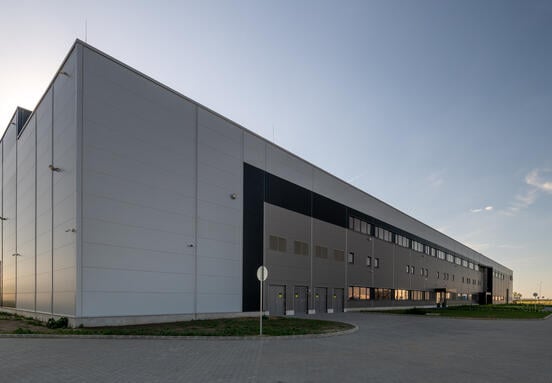
Industrial & logistics market: high demand for large-scale properties in Budapest, dynamically expanding market in regional locations
Tamás Beck (Partner, Head of Industrial & Logistics) highlighted that despite the strengthening of new leasing activity in the first half of the year, negative net absorption was recorded in Budapest. Net absorption in the capital stood at -33,607 sq m, while a positive figure of 153,976 sq m was recorded in regional locations. In terms of regional developments, the current focus is shifting towards Western Hungary (in the direction of the M1 motorway).
In the Budapest logistics market, leasing activity in the first half of 2026 reached 367,922 sq m, while net demand amounted to 249,202 sq m. In the big-box segment, 64.5% of demand was generated by new requirements.
Ten transactions exceeding 10,000 sq m each were completed, with a combined volume of nearly 200,000 sq m. This demonstrates that demand for large-scale, modern logistics capacities remains present in the market.
Nationwide, 246,395 sq m of new industrial and logistics space was completed, of which 48% was vacant upon completion. The development pipeline currently stands at 502,624 sq m, with a 58% pre-lease ratio; of this, 340,249 sq m is located in the Budapest region and 162,375 sq m in countryside locations.
Headline rents for Budapest big-box properties typically ranged between EUR 5.25–5.75/sq m/month. Following a slight increase, the Budapest industrial and logistics stock reached 4.18 million sq m, while the countryside stock expanded to 2.33 million sq m. Vacancy in Budapest increased to 14.8% (2025: 12.8%), while in countryside locations it rose to 10.5% (2025: 8.6%).
However, a high vacancy rate can sometimes also provide misleading information, as when a company has clearly defined preferences regarding location, property size, timing and technical specifications, only a limited number of options may actually be available that meet all requirements or allow for manageable compromises. It may also become necessary to significantly adjust requirements depending on the current market supply.
Retail: strengthening consumption, limited prime supply, rising rental levels
Anita Csörgő (Director, Head of Retail) highlighted that the fundamentals of the retail market were supported by the strengthening of HUF, inflation declining to 1.8% and real wage growth of 12.6% in the first half of 2026. Retail sales increased by 4.6% between January and May; the health and beauty category grew by 4.9%, while e-commerce increased by 8.9%.
Foreign tourism continued to support Budapest’s prime retail locations, despite the fact that the number of foreign guest nights decreased by 2.0% year-on-year due to geopolitical uncertainty and a high comparison base. Budapest remained Hungary’s strongest retail market: in 2025, it recorded the highest per capita purchasing power in the country, amounting to EUR 15,739, which is expected to increase by approximately 10% in 2026.
The activity of luxury and premium retailers remains strong. Along Andrássy Avenue, new stores have opened or are expected to open, including Samsonite, Missoni, Longines, Messika and W.Kruk, while Max Mara has relocated to a new location. Lululemon and Rituals have entered the market. Further international brands are also looking for retail premises in Budapest. The vacancy rate continued to decline both in prime and secondary shopping streets, including Váci Street, Petőfi Sándor Street, Szervita Square, Fehérhajó Street and the Grand Boulevard. Demand for secondary shopping streets was primarily supported by increasing space requirements from hospitality operators, service providers, barber shops, mobile phone stores, drugstores, sneaker stores, as well as discount and value-fashion brands.
In prime downtown locations, limited supply and demand from international brands resulted in further rental growth. In Váci Street, rental levels reached approximately EUR 200/sq m/month, while EUR 230/sq m/month was recorded on Fashion Street and EUR 80–100/sq m/month on Andrássy Avenue for smaller retail units classified as “Prime”. Prime rents on Fashion Street have increased by approximately 48% since the beginning of 2024. Due to limited supply and expected further rental growth, retailers are securing retail premises increasingly earlier: lease extensions and negotiations with new tenants often begin as early as two years before the expiry of the current lease agreement.
The expansion of hospitality operators has moderated compared to the exceptionally strong performance of 2024, as operators have focused on improving operational efficiency. At the same time, demand remains strong for drive-through and fast-food concepts, such as KFC, Burger King, Starbucks, Simon’s and Popeyes.
The stock of retail parks and outlet centres approached 775,000 sq m, remaining the most active segment of the development market. Rents for units larger than 400 sq m typically ranged between EUR 12–14/sq m/month. The modern shopping centre stock in Budapest stabilised at approximately 784,000 sq m. New supply remains limited, with the key future project being Duna Mall, which will be developed on the site of the current Duna Plaza, with a target completion date of 2029. Meanwhile, in prime shopping centres, rental levels for the best-located 100–250 sq m retail units strengthened to EUR 80–100/sq m/month.
Outlook: improvement is already visible, but a full recovery will be gradual
Based on the first-half 2026 data, the recovery of the Hungarian real estate market is progressing at different speeds across the individual segments, but its direction is clearly positive. The investment market is already supported by declining country risk and a more favourable financing environment, while office and logistics occupiers remain selective, and developers generally continue to require pre-leases before launching new projects. In the retail segment, consumption, tourism and limited prime supply are creating the basis for further rental growth.
The key factors for the coming period will be a stable and predictable regulatory environment, further improvement in financing conditions, and demand for high-quality, energy-efficient properties. Together, these factors may pave the way for a broader return of international capital and a sustained increase in transaction volumes. The improving market environment may also stimulate the supply side: following the postponed disposals of the past two years, an increasing number of premium assets may return to the market from 2027 onwards.
| Source: Colliers Hungary, H1 2026 Press Conference